
A renovation drawing can make an existing room disappear remarkably quickly. The cabinets become a blank wall. The floor becomes a product selection. Doors and trim vanish into a line item called demolition.
Some of that removal may be necessary. Before the drawing becomes a work order, record the existing materials and their condition. Which could continue doing a useful job?
That record gives preservation a practical role in the project. It lets an owner compare real options before the decision is reduced to choosing among replacements.
Give the existing room a fair hearing
A dated finish and a failed component aren't the same finding. Neither is an awkward layout the same problem as a worn hinge. Separate the reason for wanting a change from the condition of the material you're considering removing.
The EPA puts preventing waste ahead of managing it after it's created. Its construction-materials guidance identifies retaining existing buildings and reducing unnecessary material use as forms of source reduction. Reuse and recycling also matter, but they answer later questions about materials that have already left their original job.
For a kitchen, this can mean asking whether sound cabinet boxes can serve an improved arrangement before assuming every unit must go. For a room with tired trim, it can mean comparing repair and refinishing with complete replacement. These are options to investigate, not promises that the smaller intervention will always work or cost less.
Find the cause before choosing the finish
A new surface is a poor answer to an unexplained recurring problem. If paint keeps failing beside a window, the scope should investigate why. Correcting moisture entry and repairing its damage may require work beyond repainting. The proposal should make clear which tasks it covers.
The EPA's remodeling guidance advises tracing damage to its cause. It identifies moisture and structural problems among possible causes, as well as rubbing or impact. A repair can then be judged against the condition that caused it to be needed.
Keep photographs of the damage and the investigation with the estimate. If the cause remains uncertain, have the contractor identify what additional examination is needed and how that could change the work. An honest allowance for investigation is more useful than a fixed answer built on an unexplained stain.
Repair deserves a comparable proposal
A replacement estimate often describes a complete installed product. A repair alternative sometimes gets only a sentence: patch as needed. Those aren't comparable scopes.
The National Park Service's guidance on evaluating historic windows offers a useful model. It calls for documenting condition and considering repair first, while recognizing that severe deterioration can make replacement reasonable. A sample repair can clarify feasibility and cost. Its appearance can be evaluated, with testing where performance is critical.
That guidance concerns historic properties. It doesn't impose historic-preservation requirements on every house. The decision method travels well. A documented defect needs a clear repair proposal, with an agreed description of what a satisfactory result would be.
The repair price should account for preparation and access. It should cover replacement parts and finishing too, along with the work needed to address the cause. Ask what would make them stop and recommend a different approach. The owner can then compare defined work rather than a detailed replacement price against an optimistic repair guess.
Count the work needed to make something new
A lower future energy bill doesn't describe the entire environmental effect of a renovation. Making materials and transporting them have impacts before work begins. Construction adds to those impacts; later maintenance or removal can add more.
Historic England's commissioned life-cycle assessment study examined refurbishment and replacement scenarios for particular existing buildings. Its central lesson for this discussion is to consider embodied emissions alongside the emissions from operating the building. Leaving manufacturing and construction out can distort the comparison.
Those case studies aren't a carbon calculator for an Atlanta home. Applying their percentages to unrelated home improvements would disregard differences in the materials and energy use, along with the study's assumptions.
Keeping a usable component can avoid some new production, but repair and retrofit also consume materials and energy. Retention doesn't undo emissions already released. For a substantial project, have the environmental comparison's scope explained. Establish the period it covers and how it accounts for future replacements. A claim of lower impact needs a defined comparison.
Preserve the home while improving its performance
Keeping useful fabric doesn't require freezing a house in its present condition. Some projects improve comfort or reduce energy use. Others are driven by safer access or a layout that works for a changing household.
In Preservation Brief 3, the National Park Service treats energy improvements as a whole-building problem. Its guidance examines the envelope and systems in the context of the site and environment. It also considers how proposed changes affect existing materials and features.
Use that broad view when sequencing work. Before replacing an entire component to address a comfort complaint, establish what contribution it makes to the problem. Before adding insulation, have the proposed assembly and its moisture behavior reviewed. The aim is a useful improvement whose consequences have been considered, with retained and new work designed to function together.
Some materials need specialist decisions
A wish to salvage materials mustn't outrun a safe assessment. EPA guidance says suspected asbestos-containing materials can't be identified reliably by appearance. If renovation would disturb a suspect material, consult a properly trained and accredited asbestos professional; don't collect your own sample.
Older paint deserves attention too. The EPA recommends that owners of pre-1978 homes use lead-safe certified contractors for renovation, repair, and painting work that may disturb lead-based paint.
Resolve those questions before dismantling begins. Decisions about sanding or moving suspect materials need professional assessment. So do structural deterioration and unsafe working conditions; a donation plan can't settle them.
A second use needs an actual destination
A salvaged door needs its hardware and measurements. It also needs someone ready to use it, or it can become stored waste. If something won't stay in the house, arrange its next use before removal begins.
Habitat for Humanity's ReStore donation guidance advises checking a store's acceptance criteria in advance. Many stores don't repair items, so usable condition matters. A wish to donate doesn't guarantee acceptance.
Agree who will remove the item and keep its parts together. Decide how it'll be protected until pickup or delivery, and who's handling that trip. If a recipient declines it, establish the fallback before the project schedule leaves no time to decide. Keep the distinction between planned reuse and completed reuse visible in the project record.
Leave the next repair possible
The EPA's design-for-disassembly guidance encourages accessible connections, repair access, useful documentation, and appropriate fastening choices. It also recognizes that partial deconstruction can recover materials where complete deconstruction isn't practical.
Apply that thinking to the new work as well. Ask how a damaged part could be reached and replaced later. Keep product names, drawings, finish information, and maintenance instructions together. Photograph concealed work while it's accessible.
When the project is finished, the record should explain both what changed and what stayed. Anything retained should be an intentional part of the design. Its condition should be understood, along with the care it'll need. That's a more useful measure of a preservation-minded renovation than how completely the room was emptied.
Key takeaways
- Document condition and price a defined repair before treating replacement as inevitable.
- Compare future energy use with material and construction impacts, using project-specific assumptions.
- Confirm a safe reuse destination before removal. Keep records for future repairs.
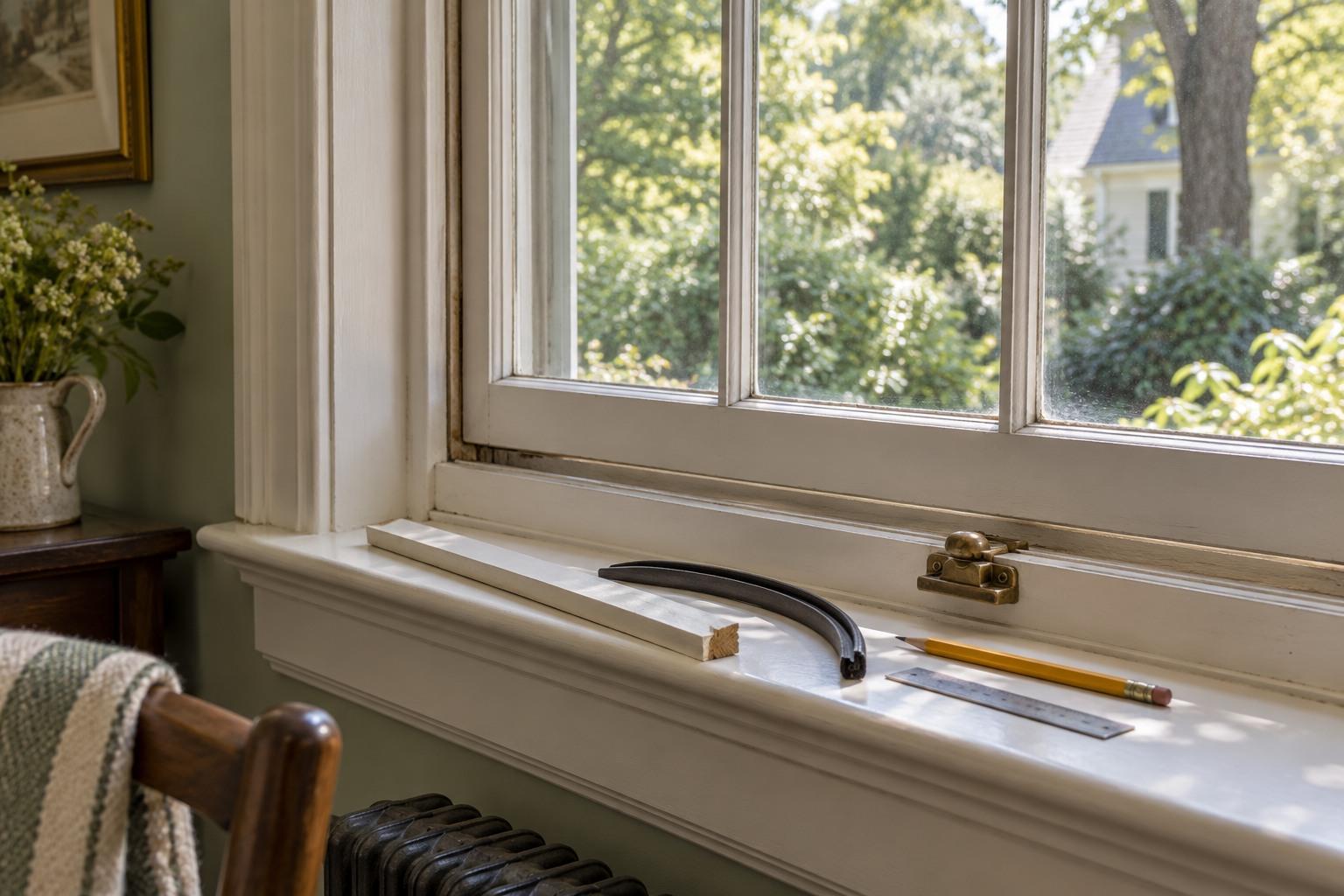
The Preservationist is published by PSP Coatings. Coverage of renovation and material reuse doesn't mean PSP provides those services. The accompanying image is a generated editorial illustration, not a photograph of a PSP project.